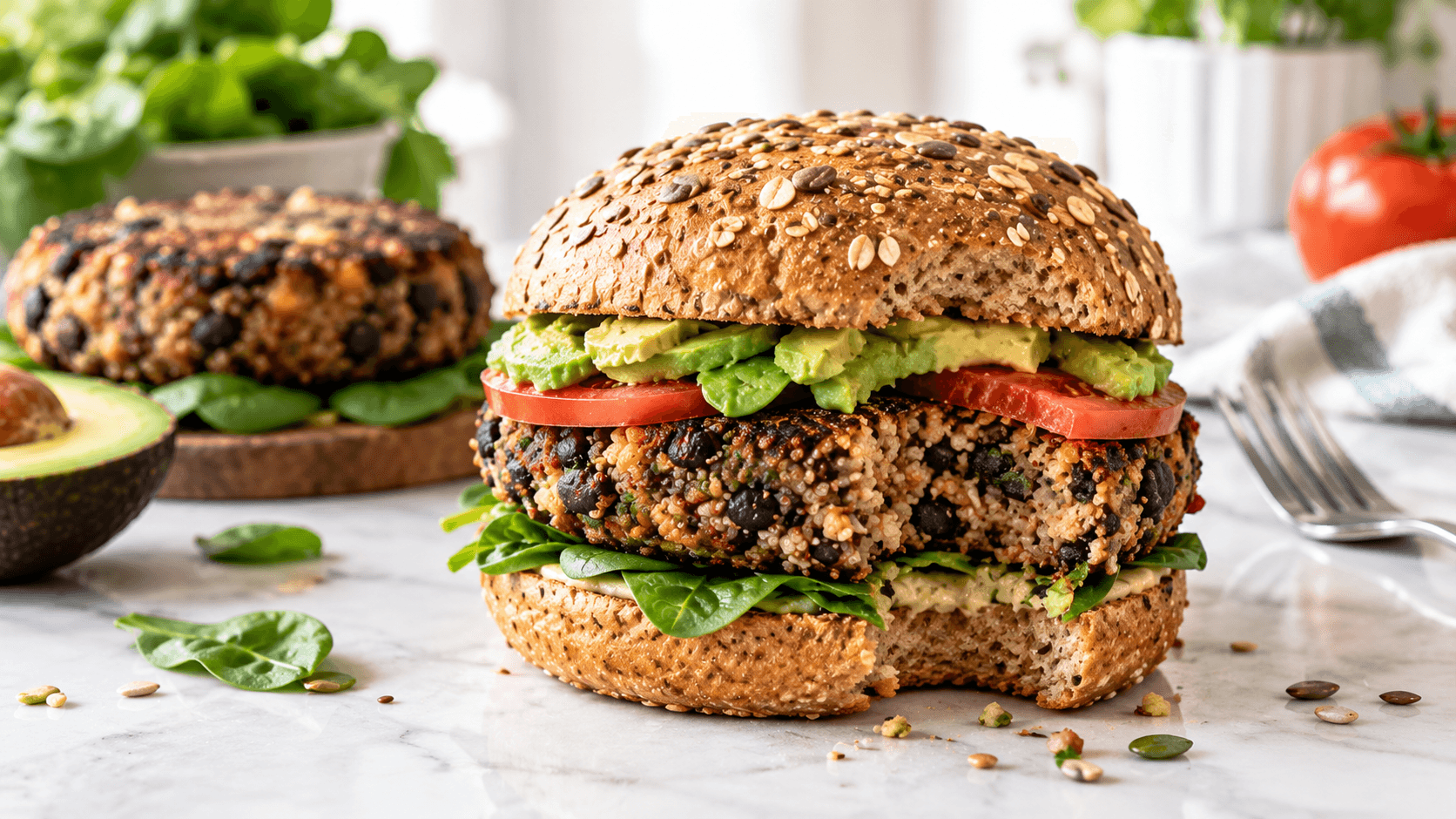
High Protein Plant Based Meals That Actually Build Muscle
When I first cut back on meat, I assumed my gym progress would stall. Everyone around me had an opinion. “Where do you get your protein?” was basically the soundtrack of every family dinner.
Here’s the thing: high protein plant based meals are not hard to make. They just need a bit of planning, and a few ingredients most of us already have in the pantry.
This post covers how plant protein actually adds up, how amino acids work without getting too nerdy, and the black bean quinoa burgers I make nearly every week.
Can Plants Really Hit Muscle-Building Protein Targets?
Short answer: yes.
Most active people do well with somewhere between 1.2 and 2 grams of protein per kilogram of body weight. For a 70 kg person, that’s roughly 85 to 140 grams a day. Split across three meals and a snack, you’re looking at 25 to 35 grams each time you eat.
That sounds like a lot until you see what plants can do:
- 1 cup cooked lentils: about 18g
- 150g firm tofu: about 15g
- 1 cup cooked black beans: about 15g
- 3 tablespoons hemp seeds: about 10g
- 1 cup cooked quinoa: about 8g
Stack two or three of those in one meal and you’re there. No powder required, though I won’t pretend I never use it on rushed mornings.
The Amino Acid Thing (Without the Biology Lecture)
Your body needs nine essential amino acids from food. Animal foods tend to have all nine in neat proportions. Most plants are a little low in one or two.
Beans and lentils run low in methionine but are rich in lysine. Grains like rice, oats, and wheat are the opposite: decent methionine, lower lysine. Put them together and the gaps mostly fill each other in.
That’s why black beans and quinoa work so well in one patty. Quinoa is one of the few plant foods with all nine essential amino acids in useful amounts, and the beans add lysine on top.
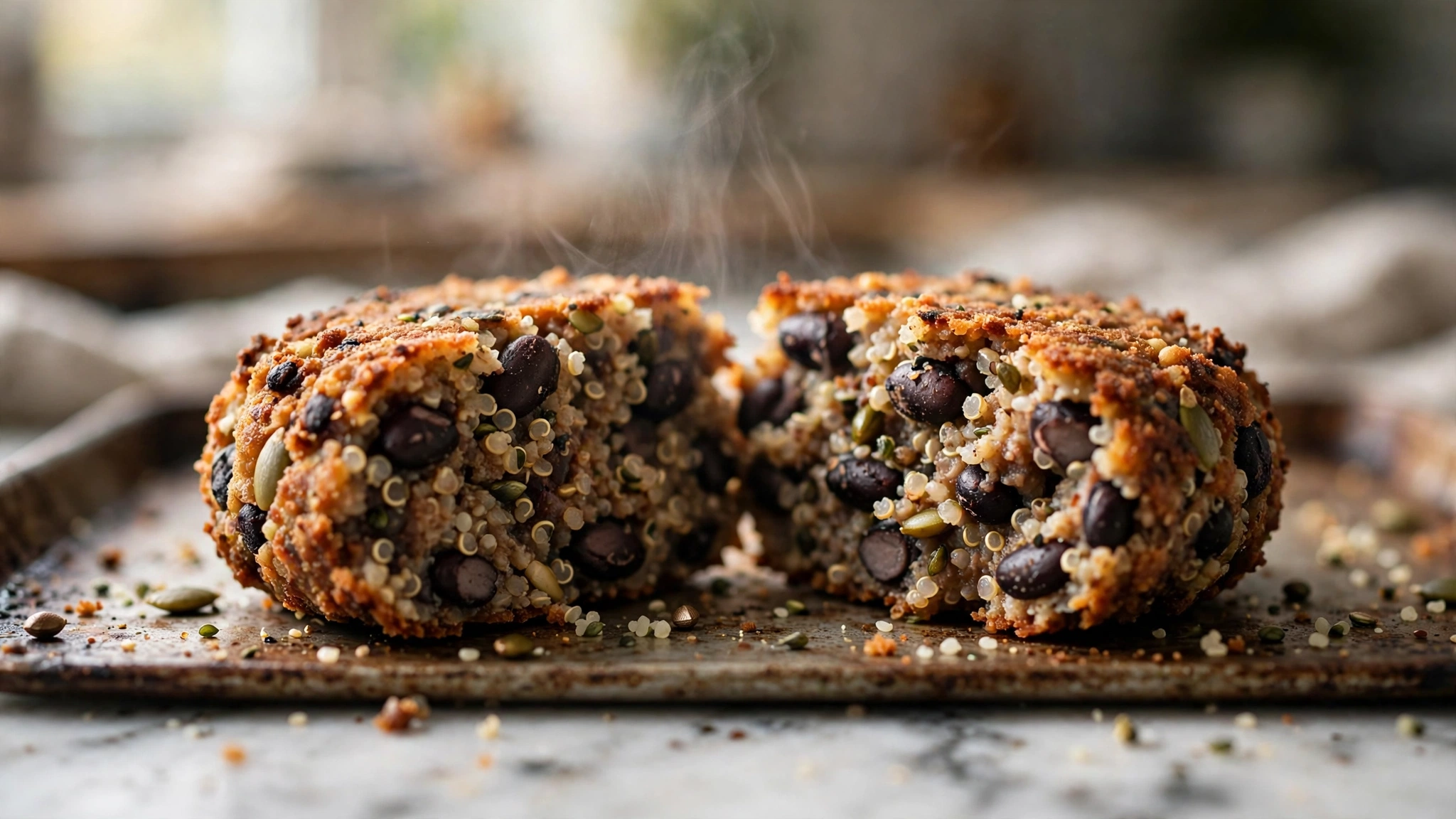
A few other combos I lean on:
- Tofu and tempeh (soy is a complete protein on its own)
- Hemp seeds, which have all nine and are easy to stir into almost anything
- Pumpkin seeds, great for extra protein and a little crunch
- Lentils with rice or whole-grain bread
One more thing. You don’t need to match these up in a single meal like it’s a chemistry exam. Eat a decent variety through the day and your body pulls from its own amino acid pool. Where I’d pay attention is leucine, the amino acid most tied to muscle building. Beans, soy, and seeds all contribute, and most people hit their target simply by getting a solid 25 to 30 grams of protein per meal.
Why I Started Making These Burgers
First off, I got tired of store-bought veggie patties. Most are either mushy or taste like cardboard, and they’re expensive for what you get. Around $6 for four sad patties adds up fast.
My first homemade attempt was a disaster. I skipped the step of drying out the beans, mixed everything into a wet paste, and the patties fell apart the second they touched the pan. We ate it as a sort of burger scramble. Still tasted fine, but not what I was going for.
Now I mash only half the beans, add some chickpea flour and oats as binders, and chill the mix before shaping. Game changer.
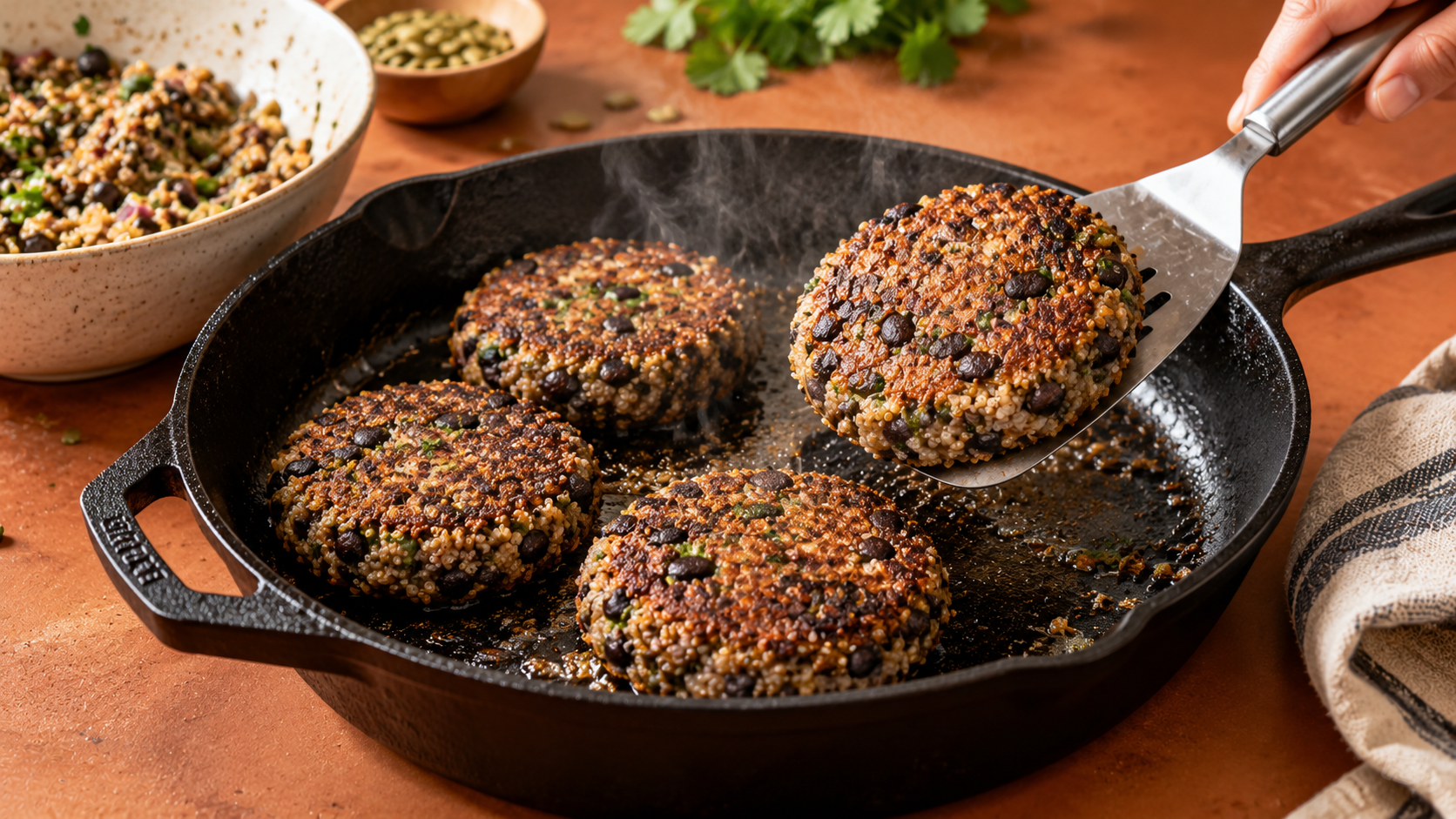
What Makes These Higher in Protein Than Most Veggie Burgers
Most veggie burgers sit around 8 to 10 grams per patty because they’re mostly vegetables and breadcrumbs. 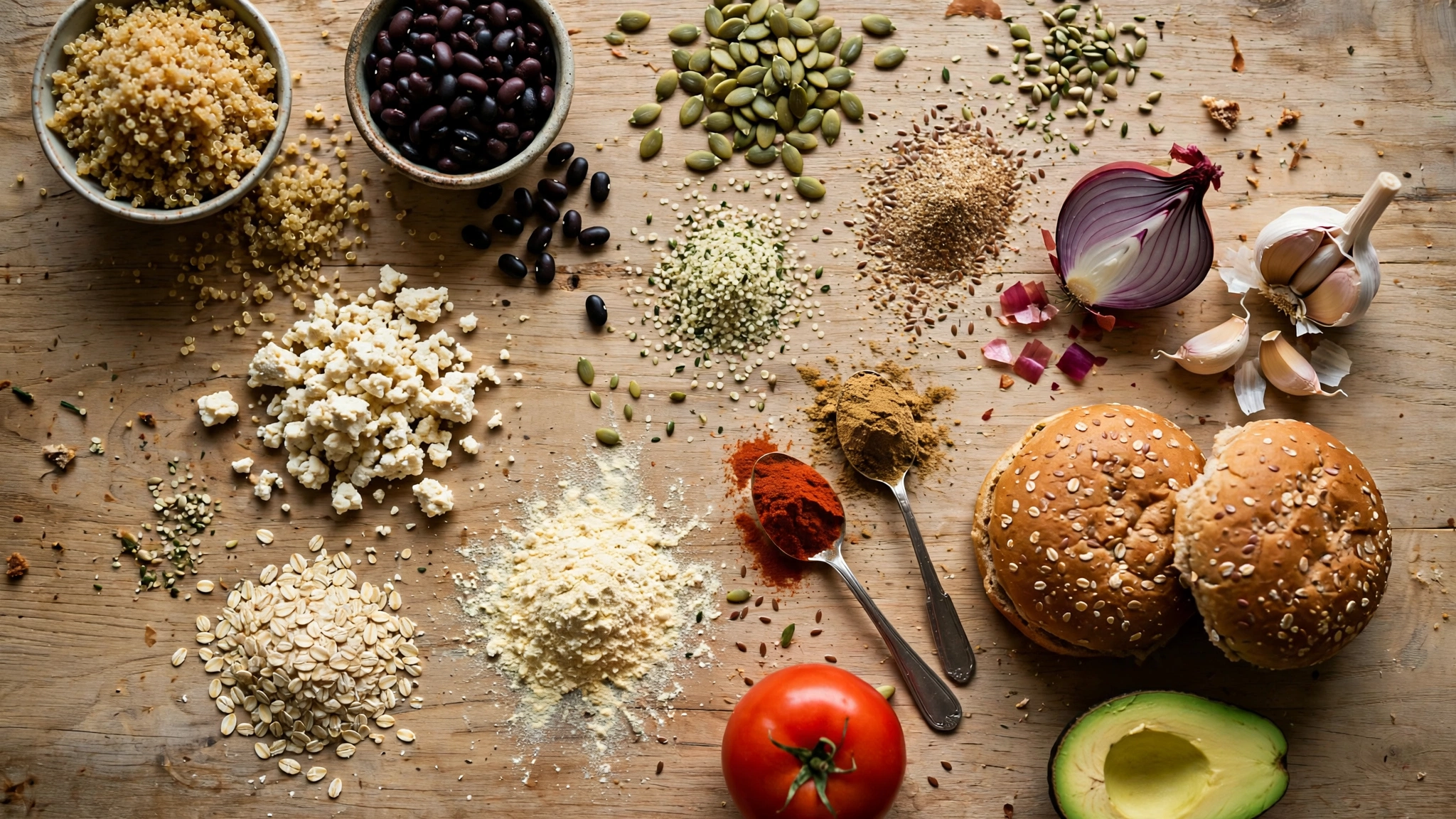 Mine adds crumbled tofu, hemp seeds, and pumpkin seeds on top of the beans and quinoa. That brings each patty to about 20 grams, and the texture is chewy instead of pasty.
Budget Notes
Dried beans cost about a third of canned, but honestly, canned is fine here. Quinoa is the pricey part, so I buy a big bag and cook a batch for the week. If pumpkin seeds feel expensive, use sunflower seeds. Same crunch, lower price.
How I Eat Them During the Week
I make a batch of four on Sunday and freeze two. Cooked patties reheat in a dry pan in about five minutes, which beats any frozen box.
Some ideas for serving:
- Classic bun with avocado, tomato, and spinach
- Over a big salad with a squeeze of lemon
- Crumbled into a wrap with hummus and shredded carrot
If you want to bump the protein past 30 grams, serve with a side of edamame or toast the bun with a spoonful of peanut butter on the side. Sounds odd, works fine.
The Bottom Line on High Protein Plant Based Meals
You don’t need fancy ingredients or a special diet. Beans, grains, soy, and seeds cover the amino acids, and a little planning covers the numbers. The recipe below is the easiest place to start. Give it a try this weekend and see how it fits your week.Full recipe is Here.