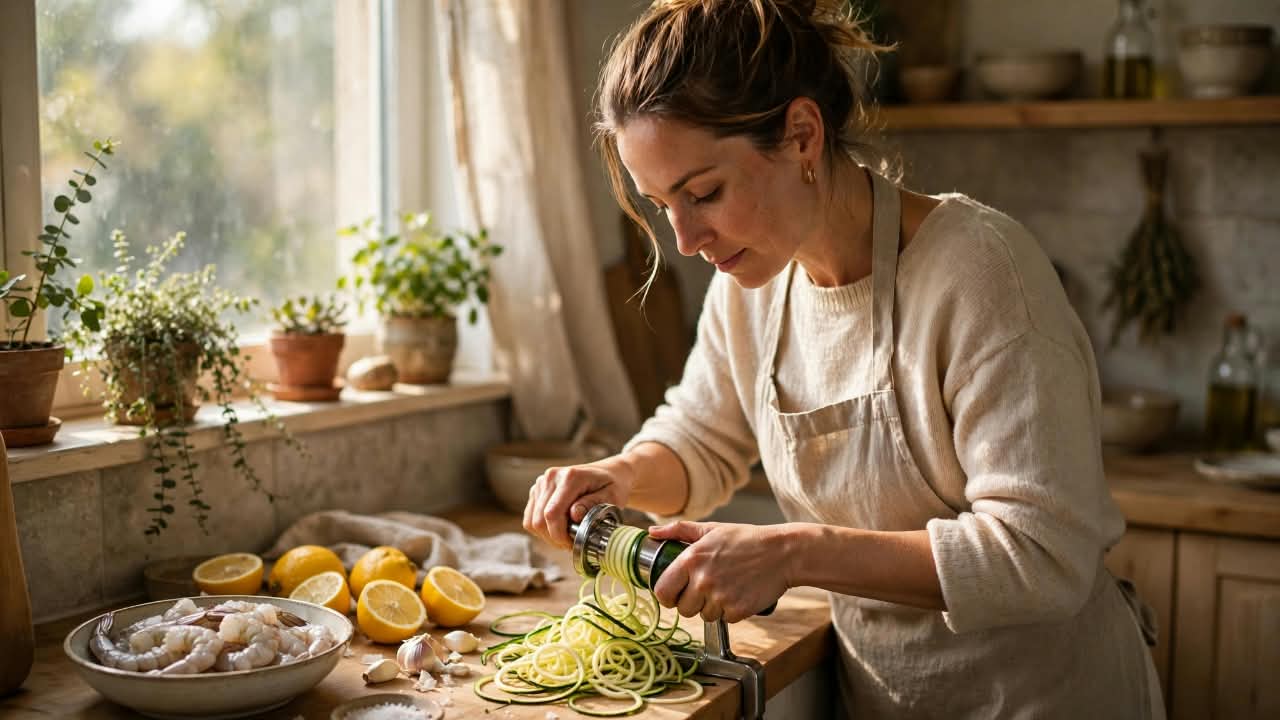
Low Calorie High Protein Dinners for Fat Loss: The Trick That Finally Stopped My Late-Night Snacking
Let's be honest. The hardest part of losing fat usually isn't breakfast or lunch. It's dinner, and the two hours after it, when the kitchen gets quiet and the pantry starts calling your name.
I spent a long time eating "diet dinners" that were technically fine on paper and left me hungry anyway. A tiny chicken breast. Half a cup of rice. A few sad green beans. I'd hit my numbers and still end up eating peanut butter off a spoon at 10 p.m.
Things changed when I started building low calorie high protein dinners for fat loss around two ideas: lots of volume and plenty of lean protein. That's it. No magic powders. Just food that fills the plate and keeps you full.
Let me walk you through why this works. Then I'll show you the dinner I make most often.
Why Being Hungry Wrecks a Calorie Deficit
Here is the thing. A calorie deficit works. The math isn't the problem. Sticking with it is.
When you're hungry all the time, every evening becomes a fight with yourself. Eventually you lose. That's not weakness. Hunger is just really good at getting what it wants.
So the goal isn't to eat as little as possible. It's to eat in a way that makes the deficit feel easy. And that comes down to satiety, which is just a fancy word for how full a meal keeps you and for how long.
Your stomach notices size
We've all been there: you eat a 400-calorie granola bar and you're hungry again in 40 minutes. Then you eat a huge salad with the same calories and you can barely finish it.
Part of the reason is physical. Your stomach has stretch receptors, and a bigger volume of food sends stronger "okay, we're good" signals to your brain. Foods with lots of water and fiber take up real space without adding many calories.
That's what "high-volume eating" means. More food on the plate for fewer calories.
Zucchini Noodles: My Favorite Volume Hack
First off, I'm not going to pretend zucchini noodles taste exactly like pasta. They don't. Anyone who says otherwise is selling a spiralizer.
But they're really good in their own way, and the numbers are hard to beat. A full cup of spiralized zucchini has roughly 20 calories. The same cup of cooked spaghetti is around 200.
Zucchini is mostly water (about 95%) plus a bit of natural fiber. That combo does two things:
- It fills your bowl and your stomach, so your meal looks and feels like a real dinner.
- The fiber slows digestion down a little, which helps you stay full longer and keeps your blood sugar steadier.
In my kitchen, I usually do a two-medium-zucchini-per-person rule. That's a big pile of noodles. It shrinks a bit in the pan, but you still get a proper bowl for well under 100 calories.
A real-life mistake I made for months: salting the zoodles and cooking them way too long. They turned into a watery, mushy mess sitting in a green puddle. Now I cook them for 2 minutes max, just until warm. Slightly crunchy is the goal.
Budget tip: Zucchini is usually cheapest in late summer, and you can often find it for next to nothing at local markets. If you don't have a spiralizer, a regular vegetable peeler makes wide ribbons that work just as well.
Why Lean Protein Does So Much of the Work
To be fair, volume only gets you halfway. Zucchini alone won't keep you full until morning. You need protein too.
Protein is the most filling of the three macros. It takes longer to digest, it affects hunger hormones in a helpful way, and your body burns a bit more energy just processing it. When you're eating less, getting enough protein also helps you hold on to muscle, so the weight you lose comes more from fat.
Why shrimp is underrated
Personally, I think shrimp is one of the most overlooked proteins for fat loss. Here's how the numbers compare. 100 grams of cooked shrimp has about 99 calories, 24 grams of protein, and almost no fat (around 0.3 grams). The same amount of cooked chicken breast has about 165 calories, 31 grams of protein, and 3.6 grams of fat. Salmon comes in at around 206 calories, 22 grams of protein, and 12 grams of fat. Chicken has a bit more protein per bite, but shrimp gives you a much bigger portion for the same calories, and that's what matters when you're trying to stay full.
Shrimp has almost no fat, so you get a big portion for very few calories. It also cooks in about three minutes. On a busy Tuesday, that matters more than any macro chart.
Budget tip: Frozen raw shrimp is usually cheaper than fresh, and "fresh" shrimp at many grocery counters was frozen before anyway. I buy big bags on sale and thaw what I need in a bowl of cold water for 10 minutes. Try to get shrimp that's already peeled and deveined. Your future self will thank you.
How I Put a Filling Low-Calorie Dinner Together
After a lot of trial and error, my dinners mostly follow one simple pattern:
- Fill half to two-thirds of the plate with high-volume veggies.
- Add a palm-to-hand-sized portion of lean protein.
- Add a small amount of fat for flavor, like a spoon of olive oil or a sprinkle of cheese.
- Use big flavors that are basically free: garlic, lemon, chili, herbs, spices.
That fourth point is the one people skip. Diet food gets boring when it's bland. Garlic and lemon add a ton of flavor for close to zero calories. A pinch of chili flakes helps too.
The Dinner I Keep Coming Back To
This garlic lemon shrimp with zucchini noodles checks every box. It takes 20 minutes, uses one pan, and comes in around 320 calories per bowl with over 40 grams of protein.
In my experience, it's also the meal that converts people. My brother swore he hated "fake noodles." He had seconds.
The shrimp gets a quick sear in olive oil with a lot of garlic. Lemon juice and zest go in at the end, then the zucchini noodles are tossed in just long enough to warm through. A little Parmesan on top, some parsley, done.
Full recipe is Here.
A Few Last Tips Before You Cook
- Pat the shrimp dry. Wet shrimp steams instead of searing. Paper towels, 30 seconds, big difference.
- Measure your oil. Pouring oil straight from the bottle is the easiest way for 300 calories to sneak into a "light" dinner. I learned that one the hard way.
- Make it a habit, not a one-time thing. Try one high-volume, high-protein dinner three nights a week. See how your evenings feel after two weeks.
Fat loss doesn't have to feel like punishment. Big bowls, good protein, lots of flavor. That's the whole idea, and it's a lot easier to keep up than being hungry every night.